The Shepherds' Story: Why God Chose the Lowly to Hear the Greatest News
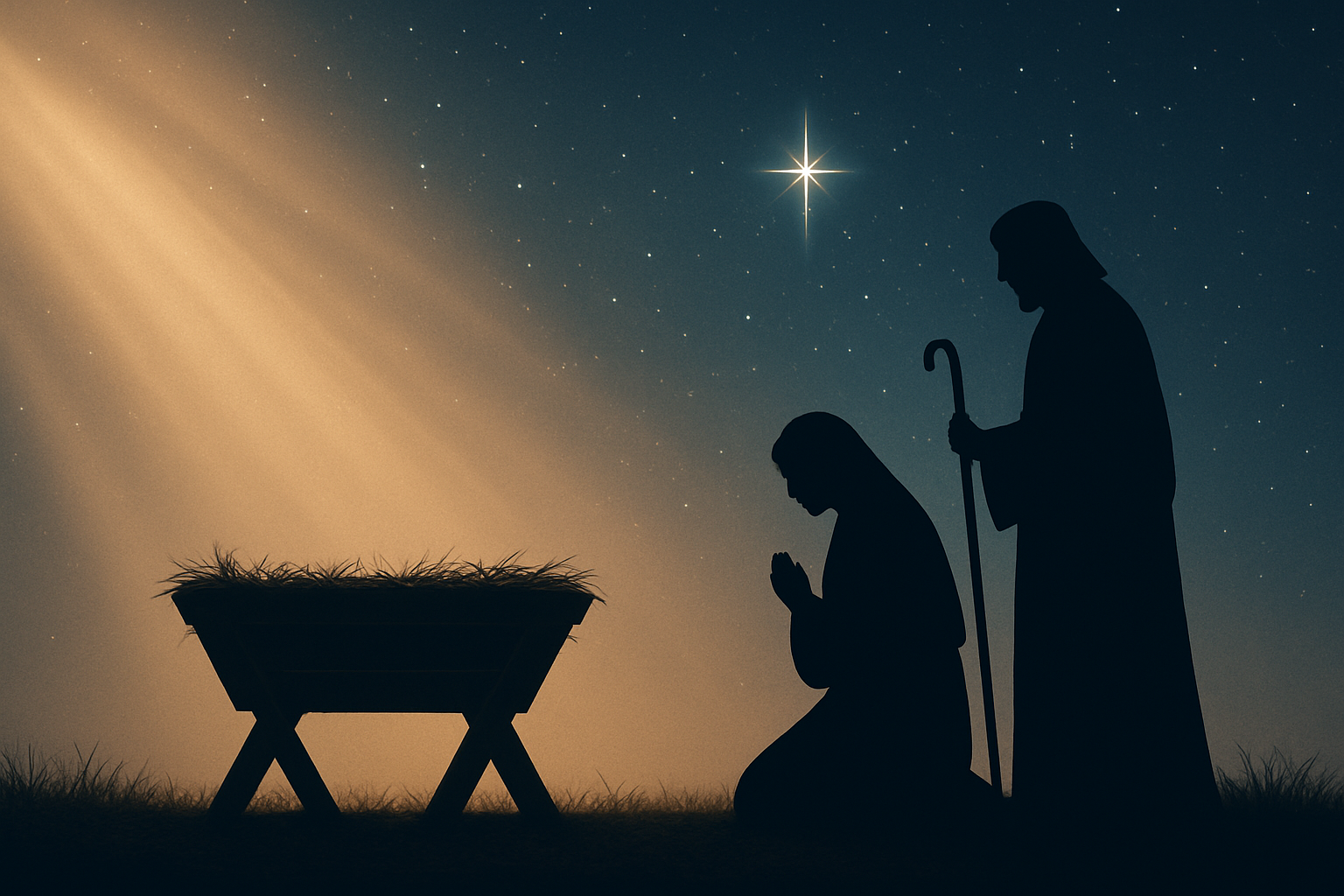
In the quiet darkness of a Judean hillside, while the world slept unaware, heaven broke through with an announcement that would change everything. But before we rush to the manger scene that has become so familiar—the gentle glow of candlelight, the peaceful animals, the holy family in reverent silence—we must pause and consider something remarkable: who God chose to hear the news first.
The Unlikely Messengers
Shepherds. Of all people, shepherds.
Not the scholars poring over ancient prophecies in Jerusalem's halls. Not the priests conducting sacred rituals in the temple. Not the kings wielding power from their thrones. God sent His angels to announce the birth of the Savior to shepherds—men doing the ordinary work of watching sheep in the middle of the night.
This wasn't an accident or an afterthought. It was intentional, purposeful, and deeply revealing of God's heart.
In the ancient world, shepherds occupied one of the lowest rungs on the social ladder. Genesis 46:34 tells us plainly that "every shepherd is an abomination unto the Egyptians." These were not men of influence or reputation. They were rough, often unkind, overlooked and dismissed by polite society. When Samuel came to anoint a new king from Jesse's sons, even Jesse himself didn't bother calling David in from the fields where he was shepherding. That's how insignificant shepherds were considered.
Yet these were the men God trusted with the greatest announcement in human history.
The Message That Changes Everything
When the angel appeared to those shepherds, the glory of the Lord shone around them, and understandably, they were terrified. But the angel's first words were "Fear not"—because what followed was not a message of judgment, but of joy.
"For behold, I bring you good tidings of great joy, which shall be to all people. For unto you is born this day in the city of David a Saviour, which is Christ the Lord" (Luke 2:10-11).
Three words in that announcement deserve our full attention: Saviour, Christ, and Lord.
A Saviour Has Come
The promise of a Savior wasn't new. Isaiah 43:11 declares, "I, even I, am the LORD; and beside me there is no saviour." Throughout Scripture, God consistently identifies Himself as the only true Savior. No prophet, no priest, no human king could carry that title. Salvation belongs to God alone.
So when the angels announced that a Savior had been born, they were declaring something profound: God Himself had come to earth. This wasn't another religious teacher or moral guide. This was the Creator stepping into His creation, taking on flesh, becoming one of us to save us.
The joy of Christmas isn't found in wrapped packages or twinkling lights or magical feelings. The joy is in this stunning reality: God our Savior has been born.
The Christ—The Messiah
The title "Christ" means "the Anointed One"—the Messiah promised throughout the Old Testament. When Andrew found his brother Simon Peter, he exclaimed, "We have found the Messias, which is, being interpreted, the Christ" (John 1:41).
The prophecy in Daniel 9:24-26 spoke of the Messiah who would come to "finish the transgression, and to make an end of sins, and to make reconciliation for iniquity, and to bring in everlasting righteousness." This wasn't just about personal salvation—it was about the ultimate restoration of all things.
Think about what that means: an end to sin. Complete reconciliation. Everlasting righteousness. Every broken thing made whole. Every tear wiped away. Every injustice made right.
When Jesus met the Samaritan woman at the well and she mentioned that the Messiah was coming, Jesus told her plainly, "I that speak unto thee am he" (John 4:26). The promised One had arrived.
Peace Through Conflict
The angels' song included another phrase that we often misunderstand: "Glory to God in the highest, and on earth peace, good will toward men" (Luke 2:14).
We tend to think of peace as comfort, ease, the absence of trouble. But biblical peace comes through conflict resolved—specifically, through death. Colossians 1:20 tells us that God made "peace through the blood of his cross."
The peace the angels announced wasn't about political stability or personal comfort. It was about reconciliation between holy God and sinful humanity—a reconciliation that could only come through the blood of Jesus shed on the cross.
The cradle points to the cross. The birth announcement anticipates the death that would bring life.
Why the Shepherds Matter to Us
God's choice to announce Jesus' birth to shepherds reveals something essential about the gospel: it comes to the lowly, the overlooked, the ones who know they have nothing to offer.
Throughout Scripture, the people God calls often feel unqualified. Moses protested that he couldn't speak well. The disciples were fishermen and tax collectors, not religious scholars. God resists the proud but gives grace to the humble.
If you've ever felt unworthy, unqualified, or insignificant, you're in good company. You're exactly the kind of person God delights to use. The shepherds didn't earn the right to hear the angels' song—they simply received it as a gift.
The Good News for Today
Two thousand years later, the good news hasn't changed. The same Savior born in Bethlehem still offers peace to troubled hearts. The same Christ who reconciled heaven and earth through His blood still welcomes sinners home.
But here's the challenge: if we celebrate Christmas without sharing why it matters, we've missed the point entirely. The warm feelings, the family gatherings, the traditions—all of these are meaningless if we fail to point people to Jesus Christ the Savior.
Your neighbors need this good news. Your family needs it. The world desperately needs to know that God Himself came to earth, lived among us, died for our sins, and rose again to offer us eternal life.
The shepherds didn't keep the news to themselves. After seeing the baby in the manger, they "made known abroad the saying which was told them concerning this child" (Luke 2:17). They became messengers of the very message they had received.
Glory to God in the Highest
When God is glorified—when He receives the honor and recognition He deserves—peace floods human hearts. The two go together: glory to God, peace on earth.
As we celebrate this season, may we not settle for sentimental feelings or temporary happiness. May we fix our eyes on the One who left heaven's glory to be born in a stable, who grew up to die on a cross, who rose from the grave to offer us peace with God.
The Savior is born. Christ the Lord has come. And that remains the greatest news the world will ever hear.
Share